Showing posts with label Classic Movie Blog Association. Show all posts

Wednesday, 14 September 2016

CMBA Blog Profile: Spellbound by Movies


The CMBA profiles two classic movie blogs per month, on the 1st and the 15th of the month. Today we're featuring Beth Ann from Spellbound by Movies.

Beth Ann Gallagher knows how to "sell" classic film.

Her blog, Spellbound by Movies, is an eclectic collection of all things classic film – filmmakers, film events, and the films themselves. She's one of those bloggers who make classic Hollywood seem fresh and hip.

Her blog is like a vintage boutique that specializes in unique pieces. One example is a look at Alfred Hitchcock and his terriers.

“It remains my most popular one four years after posting,” says Beth Ann. “I love animals, and I'm a Hitchcock fan, so I had a lot of fun writing the piece, and I'm sure that shines through.”

You can read her post on Hitchcock and his terriers HERE.


CMBA: What sparked your interest in classic film?
Spellbound by Movies: As a child, classic film was around me and part of everyday life. It was readily available on TV, and my family watched it with me. On Saturday mornings, a local station called WLVI would run comedies like Our Gang/The Little Rascals, Abbott and Costello, The Three Stooges, and Laurel & Hardy. Comedy is a great entryway to classic film! Later that day, the network would run their Creature Double Feature and show films like King Kong, Universal's horror pictures, Hammer Studios flicks from the fifties, and Toho Studios giant monster movies like Godzilla. My mom would put the Million Dollar Movie on, and we'd watch classics together. I remember watching classics at her parents' place, like Yankee Doodle Dandy. I also grew up in a New England town with a lot of history in and around it. Classic movies don't seem old when your town history includes losing its Revolutionary War naval battle. As I got a little older, VHS and AMC made classic movies even more accessible before TCM came about. There was something wonderfully aspirational to me as a kid about the people in screwball comedies. I loved the glamour of the stars' clothes and stylings and the rapid-fire repartee.


CMBA: What makes a film a "classic" in your opinion?
Spellbound by Movies: I see the phrase “classic film” meaning different things in different contexts. There's the classic film era, which stretches from the silent
era to the 1960s. Something like The Torchy Blane film series was made in the era, but it's not well-known outside of film buff circles. Then there are classic films everyone agrees on. These are the movies that everyone agrees are part of the official canon, like Bringing Up Baby, To Kill a Mockingbird, and The Wizard of Oz. The final category of classic is personal. They're the movies someone loves and can watch over and over again without diminished enjoyment. These classics might not always have the quality of a prestige picture like Now, Voyager, but they pack as strong an emotional wallop. They may be "contemporary" classics, made outside of the classic film era. A Christmas Story is a great example of that kind of picture. It's become part of people's Christmas traditions due to its subject matter, the feeling of family and the holidays it shares, and how smart it is in depicting kids, their inner worlds, and the scrapes they get into. If a film is going to end up either type of classic, it has to have a strong emotional impact and material that appeals, that will remain of its time yet timeless, and that will endure repeated viewings.


CMBA: What classic film(s) do you recommend to people who say they hate old
movies?
Spellbound by Movies: I would find out what topics or genres of movies people like, and then I'd find a corresponding classic film to recommend to them. For example, if they like fashion or biting dialogue, I'd recommend The Women. If the person was a complete blank, I'd recommend a comedy. People are more open to comedies than other types of pictures. Laurel & Hardy's The Music Box would be a great one to start with. It's short, and slapstick is a universal visual language. If the person was up for something more verbal and anarchic, I'd suggest The Marx Brothers' Horse Feathers.

CMBA: Why should people care about classic film?
Spellbound by Movies: Some people are put off by black and white movies or the phrase "classic film", but the best of these films are wonderfully alive and engaging. They may show the people and fashions of their times, but they have a timeless quality. They preserve the culture of that moment which usually has something to say about this moment. People don't change that much at the core however more sophisticated education, media, and technology have made the average person. If you can be open to classic film you can be open to a lot of experiences in life, and you can have a lot of fun at the same time. You'll learn about yourself, too.

  
CMBA: What is the most rewarding thing about blogging?
Spellbound by Movies: I love learning more about movies from writing about them. That makes me re-watch them more closely, research them, and better understand what works and doesn't work about them and how they affect me and other viewers. Writing is a type of thinking for me. Beyond that, I hope to connect with other people online about movies. I'm a relocatee to California, and my job as a field representative involves travel, so blogging and tweeting about films helps me with my online social life, which has solidified in some face-to-face friendships.

CMBA:  What challenges do you face with your blog, and how do you overcome them?
Spellbound by Movies: My job often can take up more than full-time hours in the week. Sometimes I'm travelling and sometimes I'm commuting. Either way that can be a lot of hours stuck in traffic. All of this can be very energy depleting, which affects how much I writing I can produce. I try to write more outside of my job's hectic periods. Another issue is making sure not every post has to be a big, obsessively detailed one. My goal is to fit in more shorter pieces into my blog along with the in-depth ones. I want to make sure my blog reflects more of what I'm watching and festival going-wise and to add some fun features like lists, which can be short and snappy.

  
CMBA: What advice would you give to a new blogger?
Spellbound by Movies: A lot of people can seem like experts on classic film or film in general. That can be intimidating. Everyone started out watching and loving movies. Let that passion propel you into being an active blogger. Get well-versed in films from watching them and start forming your own opinions and reactions. Then read up on the movies and find out the histories behind them. With so many people blogging out there, your blog's biggest asset is what you feel and think, your individual reactions, and how you present them. If you can, never hit the post button the same day you finish a write-up. At least give yourself an overnight to see if any new ideas or changes come to mind. Re-read your posts before they go live. Then you can spot gaps in your explanations, factual errors, jumps in reasoning, or writing errors. Find a friend or family member who's a good at editing or commenting on your writing. No matter how good a writer is, she or he is better with constructive feedback. Join blogathons to get practice writing something you might not have, to meet other bloggers, and to promote your blog. You will grow a lot as a writer and as a person through blogging, but don't forget to have fun with all of this!

  
Thank you for joining us, Beth Ann! You can visit her blog by clicking HERE.

Sunday, 14 August 2016

CMBA Blog Profile: Journeys in Classic Film


The CMBA profiles two classic movie blogs per month, on the 1st and the 15th of the month. Today we're toasting Kristen from Journeys in Classic Film.

If you're looking for all-out zeal for classic movies, you'll find it at Journeys in Classic Film.

Kristen, a prolific blogger, podcaster and CMBA Board Member, infuses her website with a fresh, energetic vibe. She offers film and book reviews, news updates, and interviews with classic film biographers and actors – such as actress Jane Withers.

"I still get readers who ask me about getting in touch with [Jane] and mentioning how she shaped their lives or other personal anecdotes," says Kristen. "This was the second interview I ever did and the first with someone directly connected to what I was writing about. Jane was so sweet and funny (and actually wanted a picture of me!). I could have talked to her for hours."

You can read Kristen's interview HERE.

  
CMBA: What sparked your interest in classic film?
Journeys in Classic Film: I've been asked this several times before and I'm not sure if it was a spark or a slow culmination. I'd always had classic movies on in my house in some form - predominately Disney animated features or The Wizard of Oz. When I was in sixth grade, we did a Tudor history unit where I was the only one who adored the 1969 film Anne of the Thousand Days. If any film could be the catalyst it was that one. For the first time I saw a sumptuousness that I didn't see in current cinema. When I was a senior I took a film class and after watching Singin' in the Rain and Splendor in the Grass I was hooked on classic cinema completely.

CMBA: What makes a film a "classic" in your opinion?
Journeys in Classic Film: There are two ways to approach the classic conundrum - time and content. The simplest answer would be, when reviewing films for my site, I limit to the "classic" era of pre-1980. Yes, I know most people only consider studio-era as the true classic, but the 1970s was a landmark decade and an ocean of time separates those films from today. From a content standpoint a classic is a movie that's timeless - that, regardless of changing fashions or technology, you can still appreciate what it sets out to do. 

CMBA: What classic film(s) do you recommend to people who say they hate old movies?
Journeys in Classic Film: Horror is the easiest way to get people into classics since everyone loves a good scare and there's little that time can do to change fear, so I always recommend Bride of Frankenstein or Psycho. Other titles that are good beginner tales are Singin' in the Rain - gives you a nice historic overview of cinema - or The Wizard of Oz.


CMBA: Why should people care about classic film?
Journeys in Classic Film: You can only appreciate the cinema of today by looking at the past. So much regarding changing content, ratings, genres, directorial influences all have their roots in classic cinema. There's a reason Quentin Tarantino fills his movies with references to old Hollywood and knowing those references makes you a more informed viewer, better able to appreciate film in its totality. On the other side of the coin, classic cinema can really help you from a personal standpoint. I know I've measured surgeries, sickness, and family issues through the classic films that helped me get through them.


CMBA: What is the most rewarding thing about blogging?
Journeys in Classic Film: The people I've met, and I'm not saying the stars who have graciously agreed to talk to me, I'm talking about the readers. My site started out as experiment just to see if I could maintain it. I never assumed I'd still be running it nearly four years later and that's because people keep stopping by to read it! I've had people stop me at TCM Film Festivals and say they love my work or bring up my weird quirks that I've mentioned on the site (like my undying love for Cliff Robertson). It never ceases to humble me because these people don't have to read my site - I think there are writers far better than me - but they do and that will always be the best reward.


CMBA: What challenges do you face with your blog, and how do you overcome them?
Journeys in Classic Film: I'm a perfectionist so I'm always trying to better my writing. I review a lot so there comes a point where saying a movie is good or bad in words that sound coherent and eloquent just doesn't happen and, I'll admit, some of my reviews are written out of a need to just finish and move on. I always feel that I'm not verbose in my thoughts enough. When I'm hitting that wall I try to watch movies I don't have to write on and just let the thoughts go. Or I'll read film books and look at their word choices and hopefully that'll inspire me. Of course the other challenge is finding the time to write and/or getting all the content out in a timely manner. In those instances all I can do is try to pre-plan as best I can.

CMBA: What advice would you give to a new blogger?
Journeys in Classic Film: Other than the tired adage of "If you think you'll make buckets of money you're wrong?" Really I'd say write because you want to and develop a voice that's your own. Readers come back to me because they know what to expect. They feel comfortable agreeing or disagreeing with me because I've clearly stated my opinions. Also, make sure whatever your writing on gives you variety. It's easy to say you'll just be a reviewer but that can cause you to burn-out quickly. Depending on your focus try to include top 10 lists, articles, and other forms of media that'll give your mind a break while engaging readers.


Thank you for joining us, Kristen! You can visit her blog by clicking HERE.

Sunday, 31 July 2016

CMBA Blog Profile: Silver Screen Modes


The CMBA profiles two classic movie blogs per month, on the 1st and the 15th. Today we're celebrating Christian from Silver Screen Modes.

Author and researcher Christian Esquevin has an infectious passion for classic film costume design.

His blog, Silver Screen Modes, presents a thoughtful, fascinating look at Hollywood costume designers and the design process. He's also the author of Adrian: Silver Screen to Custom Label.

But his interests include more than costume design. He has a true appreciation for film itself, including films that are lesser known or are not widely appreciated, such as Michelangelo Antonioni's Blowup (1966).
"The film is not everyone’s cup of tea, but part of the problem is that many people say they don’t understand it," says Christian. "[I want] to explicate the movie to others, or at least to point out that it does not follow a plot that has a neat resolution at the end. It also has a lead character that is not particularly nice to women, but he’s not nice to men, either, and that’s the story/character showing his alienation. On the other hand, it has tremendous vitality and shows swinging London in the 1960s. It’s a mystery where the answer dissolves the closer you look at it – much like life, really. I saw it in the theater in France when it first came out, and it left an indelible impression on my youth."

You can read Christian's review of Blowup HERE.


CMBA: What sparked your interest in classic film?
Silver Screen Modes: My father was a big movie buff and took us to see the new releases (now classics) when I was a kid. My great-aunt had worked as the head cutter-fitter in wardrobe at the RKO studios in the 1930s, and previously at other studios. She fitted Katharine Hepburn, Ginger Rogers, Lucille Ball, Barbara Stanwyck, Ann Miller, Maureen O’Hara, and others for their costumes. But it wasn’t until they had gone that I developed a passion for classic film and began researching the background of their making and especially the art of costume design and the designers that worked during the Golden Age of Hollywood.
The RKO Wardrobe Department in the 1930s

CMBA: What makes a film a "classic" in your opinion?
Silver Screen Modes: It takes the passing of some time certainly. And that’s because the opinions of viewers have to go through a maturing process and the stages of a film’s quality changes over time. It never fails to happen that polls of the top 25 or 100 “Best Films” are always skewed toward the newer films. Take the poll again in ten years and most of those newer films will be gone, and a fresh batch will have replaced them. The “classics” are the films that remain. Those classics will have been on umpteen lists including lists of the “classics”. Everyone has different favorite classics, and we in CMBA have a very broad and diverse list. Thankfully our viewing is not just restricted to that small spectrum of human endeavor the studios are now producing. 
CMBA: What classic film(s) do you recommend to people who say they hate old movies?
Silver Screen Modes: That might depend on the age and sex of the person, but generally I would recommend The Magnificent Seven and The Killers (with Burt Lancaster) for young men. Double Indemnity and Vertigowould be other titles with some cross-over appeal, but these have no happy ending. And for women I would recommend Roman Holiday and Holiday (with Katharine Hepburn).

CMBA: Why should people care about classic film?
Silver Screen Modes: Classic films were largely produced when character and story were more important than special effects or computer generated images. People talked, there was dialogue (or they had faces). Not that CGI can’t be an important part of the movie, but today it overwhelms human character to the point that only people with super powers seem to flourish, and then they go on to make sequels as often as super bowls. Classics include comedies and romances, and romantic comedies, not to mention westerns and musicals. These genres are virtually extinct today.


Tyrone Power & Loretta Young in Love is News

CMBA: What is the most rewarding thing about blogging? 
Silver Screen Modes: Blogging is a way to share one’s love of the movies we write about, or for me the costumes and how they define character and how the designer had to go about the process of designing them and getting those costumes on the actors and on the screen. My fascination is always with what goes on behind the screen. We watch the movie and get wrapped up in the story (if it’s a successful movie). Even as bloggers we may concentrate on an actor or director. But it’s the whole process and the teamwork that makes such an interesting story, especially during the studio system. But the talent was equally with the craft people – the set designers and costume fabricators and make-up artists and many others. The screenwriter or lead actor or director may have failed to turn out a good movie, but the studio system craft people never failed to do their best. It’s writing about part of that process that interests me. And all the dynamics and interplay of the personalities and studio politics. 

CMBA: What challenges do you face with your blog, and how do you overcome them?
Silver Screen Modes: When I first started blogging in late 2009 I thought, how was I ever going to come up with enough ideas to keep going? Well the ideas kept coming. The challenge is finding time to keep the posts going. For my posts finding the images takes as much time as writing, and the research for the images and text is very time-consuming. I know this is the same for all of us. I work at it in chunks. Since I have a full-time job, this is often done at night, I often think I should have called my blog The Midnight Blogger.
CMBA: What advice would you give to a new blogger?
Silver Screen Modes: Write about your passion. The typical advice in writing is write what you know – but you can learn as you go. If you have the drive based on passion you can keep going in the absence of much (or any) reward. But you owe it to your audience to know more than they do (most of them) on the topic of your blog post, or else why should they read it? Folks have limited time and they don’t spend a lot of it reading. Make it informative and fun.
 
Thank you for joining us, Christian! You can visit his blog by clicking HERE.

Thursday, 14 July 2016

CMBA Blogger Profile: Strictly Vintage Hollywood

 
The CMBA profiles two classic movie blogs per month, on the 1st and 15th. Today we're toasting Donna from Strictly Vintage Hollywood.

Donna at Strictly Vintage Hollywood has a thing for Rudolph Valentino.

But let's face it: who doesn't?

Not only does she curate a well-researched blog, she's written a book on Valentino, entitled Rudolph Valentino The Silent Idol: His Life in Photographs. She's now hard at work on a second book, tentatively titled The Films of Rudolph Valentino - A Chronological History.

"I have collected and studied Valentino for decades," says Donna. "I am still researching and learning; enjoying the process of research that I hope will result in an entertaining second book, my magnum opus on Valentino."

You can read more about Valentino, and his unique friendship with screenwriter June Mathis, HERE.


CMBA: What sparked your interest in classic film? 
Strictly Vintage Hollywood: I like to say I was born loving movies. My parents instilled in me the love of what are now referred to as classic films because we shared going to movies when I was a child; both at the Drive-In (how I miss that, Disney films in my jammies) and going to see first run films at Century 21 Dome (dressing up in our Sunday best the process). We also shared time watching classics such as The Wizard of Oz and Portrait of Jennie on television. For my parents, these were the films of their generation and they became mine. 

I also learned to love classic films by seeing them on television, late night television such as TV 36 in San Jose and KBHK where classics from 20th Century Fox, MGM, RKO, Paramount and Warner Brothers were on regular rotation. Once I got my library card and discovered the film history section, a whole new world opened up for me with film bios and film history.
Once I could drive, I became a loyal patron twice weekly at my local revival movie house (The Vitaphone). There I experienced familiar favorites, except they were Three Strip Technicolor prints newly struck from the camera negative. To seem them on the big screen changed my life. Films on television never looked like this!  Gob smacked is a good word to describe the feeling. For a film geek, it’s like a drug.
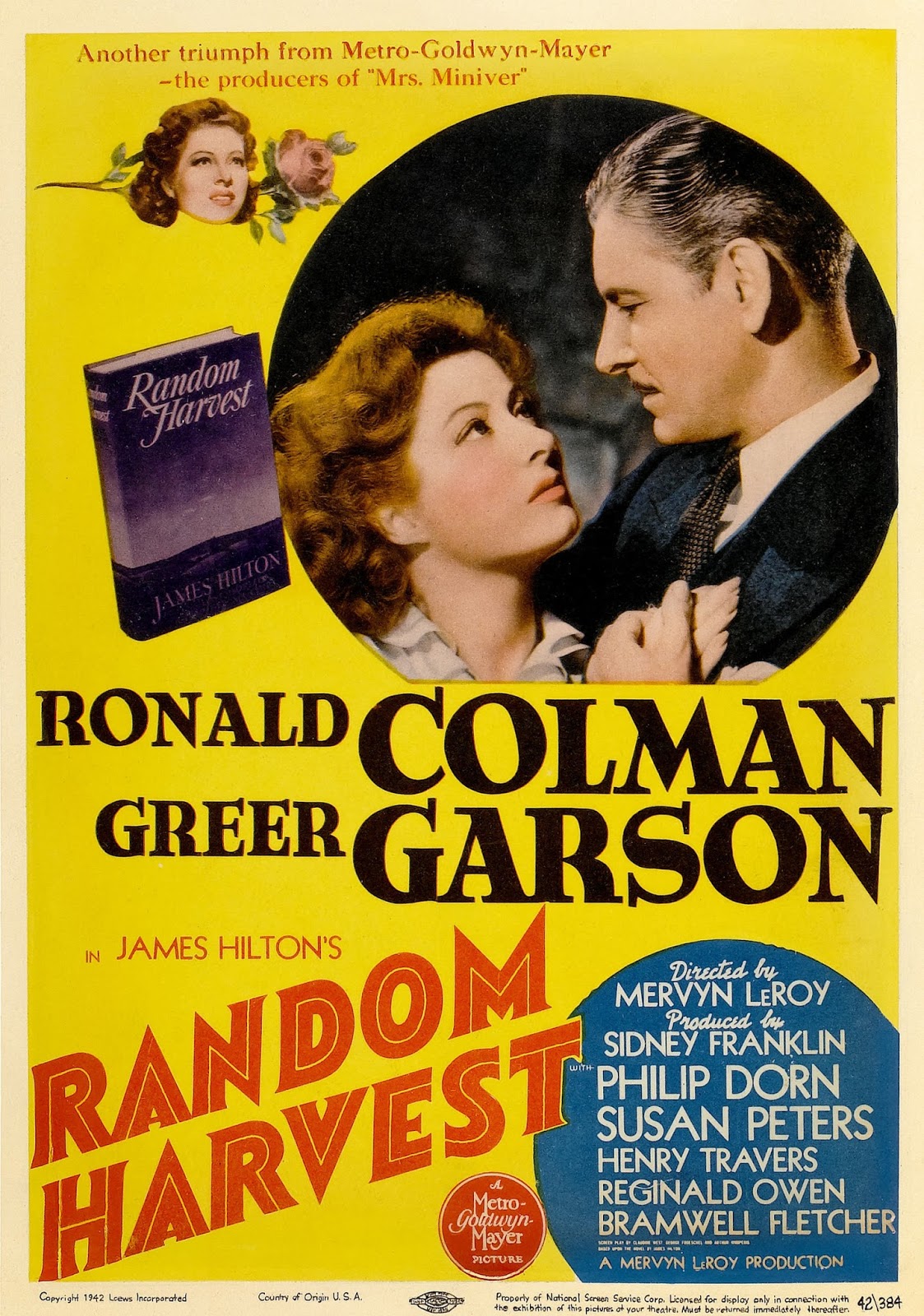
Getting to know the owners, working at the theater over a summer and learning how to run the large 35mm projectors; that was a thrill. It was also a thrill to stand in the back of the theater and watch the chariot race from the 1959 Ben-Hur six nights in a row. To see Random Harvest, a pristine new print, so clear you felt you could walk into it. The Garden of Allah, Dietrich and Boyer, impossible silly romance, in glorious Technicolor.

CMBA: What makes a film a "classic" in your opinion?
Strictly Vintage Hollywood: Literally, to me a classic film is anything from 1900 to about 1965, the dawn of film to the end of the studio era in Hollywood. This would include foreign films, too. To me, a classic does not even really have to have the best script or acting. It is a film that stands the test of time and repeated viewings. 
CMBA: What classic film(s) do you recommend to people who say they hate old movies?
Strictly Vintage Hollywood: John Huston’s The Maltese Falcon, Stanley Donen & Gene Kelly’s Singin’ in the Rain, just about any Laurel & Hardy film and the same for Buster Keaton, The Adventures of Robin Hood, Now Voyager, The Heiress, The Mark of Zorro (silent and talkie versions), The Son of the Sheik, North by Northwest, Rear Window, and Sunrise. (I could name a dozen more!) It is inconceivable to me that someone could actually say they “hate” old films. For those that do, I can only imagine that they have not really seen any. So many genres, gangster, musicals, comedies, drama, women’s pictures, adventure films, romance, sci-fi, you name it, there really is something for everyone if they could be introduced to seeing a film as it was meant to be seen, i.e. on the big screen. At the very least, on television without commercials, like TCM.


CMBA: Why should people care about classic film?
Strictly Vintage Hollywood: In today’s world of instant news, the 24-hour news cycle and endless tweets and Facebook posts, sometimes I think people need to care about classic films as a way to let go, lose themselves and enjoy 90 minutes (or two hours) of solid entertainment. Any classic film is a reflection of the era in which it was produced, but, the bottom line is all are human stories. They can touch you, empower you and make you feel great just when the real world has got you down. In other words because they are so very entertaining.
Why should they care about preserving them? Cinema is the most American of art forms. Film can be a snapshot of the period. Once lost, they likely remain so and a part of our history is gone forever, except stills and lobby art. Can you imagine a world without Gone with the Wind or The Wizard of Oz?

CMBA: What is the most rewarding thing about blogging?
Strictly Vintage Hollywood: The best thing I have found in blogging and writing about film is the people I have met. I mean, I follow several blogs and I love to read other viewpoints and learn about films I have not yet seen. I enjoy writing, and blogging is a tool for me to improve my writing and to share about films I love. If I get one comment telling me they’ve loved a film I’ve written about, that’s the best icing on any cake, metaphorically speaking. This takes me back to seeing films with my parents. Blogging and classic film is a shared experience, and it’s wonderful. I’ve met some of my best friends this way.


CMBA: What challenges do you face with your blog, and how do you overcome them?
Strictly Vintage Hollywood: The biggest challenge is finding time, and trying to be regular in posting. A challenge especially now as I am researching and writing a manuscript. I am trying to be proactive this year and get in the habit of a weekly post, even a small one. For the manuscript, I'm taking inspiration from my friend over at Backlots, Lara, to write something every day on the manuscript no matter how small.
CMBA: What advice would you give to a new blogger?
Strictly Vintage Hollywood: Write about what you love. That, to me, is the biggest motivation. Be receptive to constructive criticism and ignore the trolls. 


 Thank you for joining us, Donna! You can visit her blog by clicking HERE.

Thursday, 30 June 2016

CMBA Blogger Profile: Movies Silently


The CMBA profiles two classic movie blogs per month, on the 1st and 15th. Today we're celebrating Fritzi from Movies Silently. 

Reading the blog Movies Silently is like visiting an amusement park. If you plan to drop by, it's guaranteed you'll end up spending the day. Better bring a lunch.

Fritzi's site is an adventurous look at silent film, as explored through reviews, Top 10 (or Bottom 5) Lists, amusing silent film gifs, and even vintage recipes. It is a celebration of silent film in all its forms – the serious, the witty, the tragic.

It's also a groundbreaking site that isn't afraid to attack cherished misconceptions.

"My review of The Cossacks is an example of what I most want to accomplish on my blog," says Fritzi. "It represents six months of research culminating in an epic takedown of a reasonably beloved film and an expose of its shameless plagiarism. Looking below the surface was rewarding in this case because it allowed me to both dig deep into film history and expose an injustice that has been ignored for almost eighty years."

You can read Fritzi's review HERE.


CMBA: What sparked your interest in classic film?
Movies Silently: My parents were very anti-TV and we lived in a rather rural area because of my father's job so if we watched movies, they were VHS tapes from my parents' collection and they preferred the classics. Pretty much every movie I saw, except the original Star Wars trilogy, was at least three decades old so I don't really think of classic movies as odd. Modern movies are the weird ones, I tell you!

I particularly loved cliffhanger serials from the 1930s and 1940s. Flash Gordon, G-Men vs. the Black Dragon, Nyoka and the Tigermen and Buck Rogers are still among my favorites. They resembled Star Wars and I was addicted to their kitschy style. I also loved Cary Grant, Errol Flynn, Katharine Hepburn, Our Gang, Charley Chase, the Marx Brothers and Laurel and Hardy.

As for silent film, I was in my teens when I realized that my movie knowledge pretty much ended at 1930. I decided to remedy that and got a few silent films, one of which was a Charlie Chaplin feature. I was hooked! My favorite discoveries in my first year of silent film were Mary Pickford, Harry Langdon and Cecil B. DeMille. I was familiar with DeMille's cheesy sound epics, of course, but his tight, fast-paced silent films were a revelation.


CMBA: What makes a film a "classic" in your opinion?
Movies Silently: That's open to interpretation but I consider the classic era to be from the birth of projected cinema (1895) to the fall of the Code with the introduction of the modern ratings system in 1968. As to whether or not an individual movie is a classic, I think it's a matter of how memorable it is, even if the film itself is obscure.

CMBA: What classic film(s) do you recommend to people who say they hate old movies?
Movies Silently: For silent films, I recommend shocking people with something like The Penalty or The Mystery of the Leaping Fish, which both contain rather extreme content. The latter film is a Sherlock Holmes spoof with a hero who powders his nose with cocaine. In 1916. I have also had good success with Ernst Lubitsch's quirky comedies, from The Oyster Princess to The Shop Around the Corner.

 
CMBA: Why should people care about classic film?
Movies Silently: For the same reason they should care about history, classical music and fine literature: it expands the mind while giving us a glimpse into the past. All modern movies owe something to the classics and it's always worth it to look and see what they have to offer.

CMBA: What is the most rewarding thing about blogging?
Movies Silently: First, it really opens my mind and makes me watch silent films that I might have otherwise ignored. I like to hold reader request events and I am always thrilled with the wide variety of selections that my readers come up with. Second, blogging about silent films has put me in touch with producers, accompanists, authors and other silent film professionals whose work I have admired for years. I consider it a huge privilege to get to know them.


CMBA: What challenges do you face with your blog, and how do you overcome them?
Movies Silently: The biggest challenge is that silent film scholarship tends to be a bit calcified. It is taken for granted that D.W. Griffith invented everything, all British silents are awful and that hardly any women were powerful behind the camera. All that is changing, of course, and I want to be part of the change. I consider it a duty to start smashing idols, questioning unimpeachable sources and generally raising hell. Of course, this can lead to a certain amount of resistance in some quarters but the tide is turning.

I always try to come up with a fresh perspective, a new angle for every film I review. I mean, what's the point of reviewing a film if I am just going to echo what everyone else says? If I can't find that angle, I put the film aside for a while and wait until I can think of one. This can take years but the wait is worth it. For example, I handled my review of the 1925 version of Ben-Hur by attempting to write the most comprehensive behind-the-scenes story possible.

CMBA: What advice would you give to a new blogger?
Movies Silently: 1. Look at your writing objectively and determine your strengths and weaknesses.
2. Have someone whose opinion you respect read your writing and tell you whether or not it is interesting and fun.
3. Write about what you love with passion, don't just pick a topic because it seems popular. If your writing is entertaining, people will come.
4. All my favorite bloggers have this thing in common: they write highly subjective, highly opinionated content and they clearly articulate what they do and do not like.
5. If you are planning to blog about films, read, read, read and read some more. Read what? Film criticism and theory from every era. Study the critics, find out what makes their writing smart or amusing.
6. Don't take shortcuts. Don't just parrot what other people write. Step off the beaten path and try to share obscure picks. It will give your blog texture and variety.

Thanks for joining us, Fritzi! You can visit her blog by clicking HERE.